Signed in as:
filler@godaddy.com
_-_Sir_Walter_S.jpg/:/cr=t:8.88%25,l:0%25,w:100%25,h:82.24%25/rs=w:1209,h:1209,cg:true)
(August 15, 1771 – September 21, 1832)
Scottish novelist, poet, and historian
Scott is known for his novel Ivanhoe and for his narrative poem, The Lady of the Lake.
Sir Walter Scott (1771 – 1832) was a groundbreaking Scottish historical novelist, poet, and historian. Widely credited with inventing the historical fiction genre, his works—such as Waverley and Ivanhoe—became international bestsellers and profoundly shaped European and American literature.
Key Works and Literary Legacy
Scott pioneered the method of weaving fictional characters into authentic, real-life historical events and conflicts.
Cultural and Historical Impact
Scott's passion for his heritage fundamentally changed how Scotland was perceived and celebrated globally.
Personal Life and Interests
Afflicted with polio in early childhood, Scott walked with a permanent limp, but he possessed boundless energy and a phenomenal memory for local folklore. He translated German ballads early in his career, served as a lawyer and Sheriff, and even rediscovered the long-lost Scottish Crown Jewels in 1819. He spent his later years building and residing at the spectacular Abbotsford estate in the Scottish Borders.
Read more about Walter Scott:
https://en.wikipedia.org/wiki/Walter_Scott
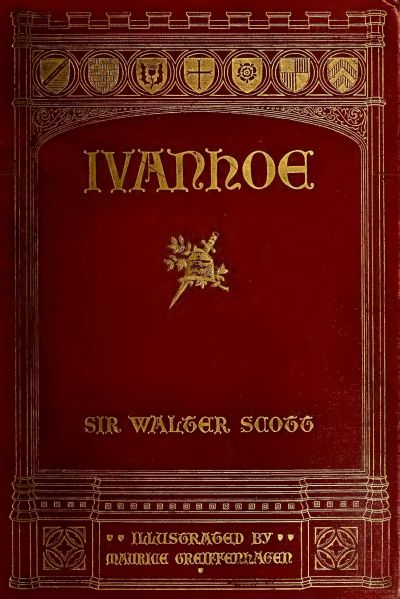
Ivanhoe: A Romance, by Walter Scott, is a historical novel published in December 1819. Set in 1194 England, it tells the story of Saxon knight Wilfred of Ivanhoe, disinherited for his loyalty to Norman King Richard the Lionheart and forbidden love for Lady Rowena. The novel weaves together tournaments, outlaws, and deep divisions between Jews and Christians, Normans and Saxons. Scott's vivid portrayal of medieval England sparked widespread fascination with chivalry and the Middle Ages, influencing how generations would imagine figures like Richard the Lionheart and Robin Hood.
Ivanhoe is a famous historical novel by Sir Walter Scott, published in 1819, set in 12th-century England during the conflict between Saxons and Normans and the return of King Richard the Lionheart from the Crusades. The story follows the disinherited Saxon knight Wilfred of Ivanhoe as he returns to England, competes in a tournament disguised as the "Disinherited Knight," and becomes entangled in political intrigue, romance with Lady Rowena, and the adventures of Robin Hood (as Locksley) and King Richard. It is known for its themes of chivalry, honor, and prejudice, and for popularizing the modern image of Robin Hood.
Key Aspects
Major Characters
Legacy
One of Scott's most popular works, it significantly influenced the popular perception of medieval England, Robin Hood, and King Richard.

Film Adaptations of Ivanhoe:
