Signed in as:
filler@godaddy.com

(1853 – 1911)
American Author and Artist
Known for his 1883 novel, Robin Hood, and his pirate illustrations.
Howard Pyle (1853–1911) was a legendary American author and artist widely celebrated as the "Father of American Illustration". Operating during the late 19th and early 20th century, he revolutionized storytelling by harmonizing vivid, narrative-driven visuals with classic tales, particularly those of medieval lore, swashbuckling pirates, and chivalry.
Core Contributions
Artistic Style and Pedagogy
Essential Works
Read more about Howard Pyle:
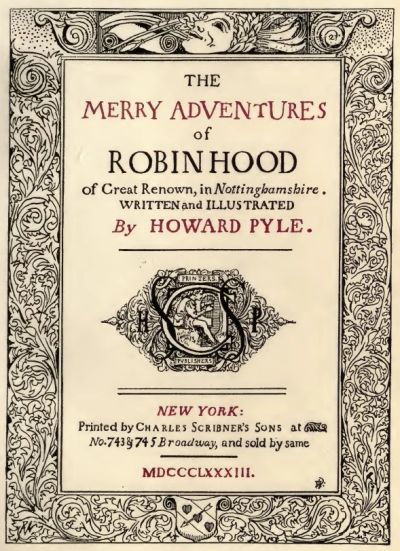
Published in 1883, Howard Pyle’s The Merry Adventures of Robin Hood is the seminal American children’s novel that popularized the modern legend of the heroic outlaw who robs the rich to give to the poor. Written in an accessible pseudo-archaic English, the book compiles traditional English ballads into a cohesive, highly influential, and lighthearted narrative.
The Core Premise and Setting
Key Characters and Plot Structure
The book is highly episodic. It follows Robin's journey from an 18-year-old who becomes an outlaw after killing a king's forester in self-defense, to his eventual gathering of loyal companions:
Tone and Legacy
Pyle's text is characterized by its jovial tone, where Robin treats almost every dangerous encounter as a "merry adventure" or a joke.
Because Pyle wrote and illustrated the book himself, his interpretation became the definitive blueprint for almost all subsequent pop culture adaptations in literature, drawing, and film, including the classic 1938 Errol Flynn movie The Adventures of Robin Hood.

Film Adaptations of Robin Hood:
Howard Pyle’s 1883 novel, The Merry Adventures of Robin Hood, is the definitive source for modern Robin Hood lore. While many films are based on the same medieval ballads Pyle used, direct adaptations of his specific text include:
The Adventures of Robin Hood (1938): Though Pyle isn't directly credited, this iconic Errol Flynn film heavily incorporates the classic incidents and structure of Pyle’s stories.
The Story of Robin Hood and His Merrie Men (1952): A live-action Disney film loosely based on Pyle’s specific episodic encounters, such as the famous staff fight with Little John.
Robin Hood (1973): Disney's classic animated adaptation that reimagined Pyle's merry outlaws (Robin, Little John, Friar Tuck) as anthropomorphic animals.
