Signed in as:
filler@godaddy.com
.jpg/:/rs=w:1209,h:1612,cg:true,m/cr=w:1209,h:1612)
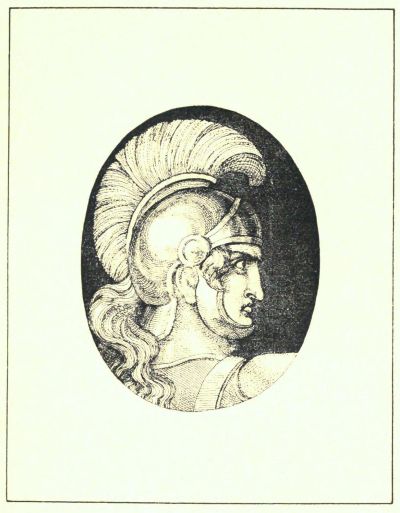
(Eighteenth Century / 1700s)
Ancient Greek Poet
Homer is known for The Iliad and The Odyssey.
Homer is the legendary ancient Greek poet credited with writing the Iliad and the Odyssey. Living around the 8th century BCE, his epic stories are the foundation of Western literature. They tell tales of the Trojan War, brave heroes, and angry gods.
Who Was Homer?
Scholars are not sure if Homer was a real person. He is often pictured as a blind man with a beard. Instead of writing, he probably recited stories out loud. This is like how a rapper rhymes a beat without reading words from a page. Later, other people wrote his spoken poems down.
The Iliad
The Iliad is a story about the Trojan War. It focuses on Achilles, the best Greek fighter. He gets very mad at his boss. Because of his anger, he stops fighting for a long time. Without Achilles, the Greeks lose many battles against the Trojans. In the end, he comes back to fight the Trojan hero Hector.
The Odyssey
The Odyssey is about a Greek hero named Odysseus. He fights in the Trojan War and helps the Greeks win by using the famous Trojan Horse. Afterward, he tries to sail back home to his family. The trip takes him ten years. Along the way, he battles angry gods, dangerous monsters, and the one-eyed Cyclops.
Why Does Homer Matter?
Homer's stories taught ancient Greeks about bravery and how to behave. They also showed how humans and gods interact. Even today, modern movies and books still use these same adventure ideas.
Read more about Homer:
The Iliad is an ancient Greek epic poem traditionally attributed to the blind poet Homer and was composed around 750 BCE to 650 BCE.
Core Context
The Main Plot
The epic does not cover the whole Trojan War. It covers only a few weeks of the final year, focusing entirely on the rage of the Greek warrior Achilles.

Several movies adapt Homer's The Iliad. The most famous is the 2004 Hollywood blockbuster Troy, which focuses on the human conflict of the Trojan War. For a more classic experience, check out the Italian epic The Fury of Achilles or the sweeping 1956 film Helen of Troy.
Here is a quick look at the original movies:
Read more about the film adaptations:
https://en.wikipedia.org/wiki/Category:Films_based_on_the_Iliad
Helen of Troy (1956) is a classic epic drama directed by Robert Wise. It follows Trojan Prince Paris, who washes up in Sparta while on a peace mission. He falls in love with the Greek Queen, Helen, not knowing who she is. Their forbidden romance sparks the legendary Trojan War.
Key Plot Points
Main Cast
Production Details
Watch the original trailer:
https://www.youtube.com/watch?v=gSe2OjMoOPk
Watch the IMDb trailer:
https://www.imdb.com/title/tt0049301/
Watch the movie:
The primary film adapting Homer's Iliad released in 1961 is the Italian sword-and-sandal epic, The Trojan Horse, (originally titled La guerra di Troia). Directed by Giorgio Ferroni, the movie retells the final year of the Trojan War from a Trojan perspective.
Cast and Crew
Plot Summary
The story picks up in the tenth year of the Trojan War, shortly after the death of Hector. Unlike purely Greek-focused adaptations of The Iliad, this film highlights the efforts of the Trojan hero Aeneas as he leads the defense of his city. It features large-scale battle scenes and culminates in the famous ruse of the giant wooden horse. The movie ends with the burning of Troy and Aeneas leading the survivors to found Rome.
Read about the movie:
https://en.wikipedia.org/wiki/The_Trojan_Horse_(film)
Watch the movie:
The Fury of Achilles is a 1962 Italian historical drama based on Homer's Iliad. Set in the Trojan War, it follows the bitter clash between the warrior Achilles and the Greek commander Agamemnon. This feud and Achilles' grief over his fallen friend fuel a legendary quest for vengeance.
Main Details
Plot
The story takes place in the final years of the Trojan War. The Greek army is tired and far from home. A massive fight breaks out between the hero Achilles and the Greek leader Agamemnon. Agamemnon steals Achilles' prize of honor. In a deep rage, Achilles refuses to fight anymore.
Without their best fighter, the Greeks suffer heavy losses. The Trojan champion Hector pushes the Greeks back to their ships. Achilles stays on the sidelines until a personal tragedy strikes. After his close friend is killed in battle, Achilles' grief turns into pure fury. He puts on his armor, rejoins the fight, and challenges Hector to a fatal duel.
Read about the movie:
https://en.wikipedia.org/wiki/The_Fury_of_Achilles
Watch the movie:
Troy is a 2004 (often searched as 2002/2003 during early development) historical epic directed by Wolfgang Petersen, based on Homer's Iliad. The film stars Brad Pitt (Achilles), Eric Bana (Hector), and Orlando Bloom (Paris). It follows the brutal Trojan War, sparked when Prince Paris steals Queen Helen of Sparta from her husband.
Plot Summary
Greedy King Agamemnon uses the kidnapping of Helen as an excuse to attack the walled city of Troy and claim the Aegean Sea. To win, he relies on Achilles, the world's greatest warrior, who fights for glory rather than for Agamemnon's politics. A brutal, ten-year siege follows. The war peaks with a legendary, tragic duel between Achilles and the honorable Trojan Prince Hector. Afterward, the Greeks fake a retreat and trick the Trojans into bringing a massive wooden horse inside their city walls, leading to the total destruction of Troy.
Box Office Details
Read about the movie:
https://en.wikipedia.org/wiki/Troy_(film)
Watch the trailer:
https://www.imdb.com/title/tt0332452/
Watch the movie:
https://www.amazon.com/dp/B001N4L38K?lv=shuf&channelId=500&plpRedirect=mhFallback
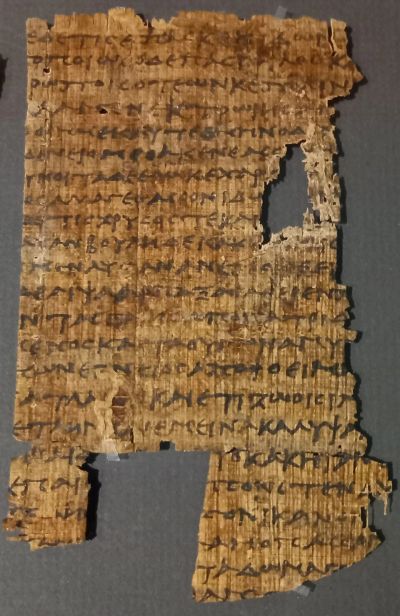
The Odyssey is an ancient Greek epic poem traditionally attributed to the blind poet Homer and composed near the end of the 8th century BCE, roughly between 725 and 675 BCE. The narrative covers 24 books and operates on three parallel tracks: a son's search for his father, a hero's perilous struggle against gods and monsters, and a household fighting off internal ruin.
1. The Crisis in Ithaca (Books 1 – 4)
Ten years after the fall of Troy (and twenty years since Odysseus left home), the island kingdom of Ithaca believes its king is dead. A destructive mob of over a hundred suitors occupies the royal palace. They consume the estate's livestock and wealth while aggressively pressuring the loyal Queen Penelope to choose a new husband. Facilitated by the goddess Athena, Odysseus’s young son Telemachus journeys to the Greek mainland to secure news of his father from old war comrades, King Nestor and King Menelaus.
2. The Apologue: Monsters and Wanderings (Books 5 – 12)
The perspective shifts to Odysseus, who is trapped on the remote island of Ogygia by the infatuated nymph Calypso. Released under orders from Zeus, Odysseus sails away on a raft but is promptly shipwrecked by his divine enemy, the sea god Poseidon. He washes ashore in Phaeacia, where he recounts his traumatic ten-year journey backward.
3. Homecoming and Reckoning (Books 13 – 24)
The Phaeacians return Odysseus to Ithaca under a veil of secrecy. Athena disguises him as a filthy beggar so he can evaluate who remains loyal to his household. He reveals his identity to Telemachus, and together they plot an ambush. Penelope announces an archery contest: she will marry whoever can string Odysseus’s massive hunting bow and shoot an arrow through twelve axe heads. Every suitor fails. Still in disguise, Odysseus effortlessly strings the bow, fires the shot, and immediately turns the weapon on the suitors, executing them all alongside his son to reclaim his throne.
Read more about the film adaptations:
https://en.wikipedia.org/wiki/Category:Films_based_on_the_Odyssey
Read IMDb's list of 53 Odyssey film adaptations:
https://www.imdb.com/list/ls523810827/
Watch this video on film adaptations of The Odyssey:
Watch the 1997 adaptation of The Odyssey, directed by Andrey Konchalovskiy:
Part I:
https://www.youtube.com/watch?v=VwdoA0_t2vI
Part II: