Signed in as:
filler@godaddy.com

(February 7, 1812 – June 9, 1870)
English Novelist
Charles Dickens is known as the greatest novelist of the Victorian era.
Overview
Charles Dickens (1812 – 1870) was a famous English writer, considered to be the greatest novelist of the Victorian era. He wrote 15 major novels and many short stories. His books share a mix of comedy, deep drama, and messages for social reform.
Early Life and Career
Dickens was born in Portsmouth, England. When he was 12, his father was sent to prison for debt. Young Charles had to leave school and work in a shoe polish factory. This trauma shaped his views on poverty and child labor. He later worked as a journalist and reporter before finding massive success with his first book, The Pickwick Papers (1836).
Publishing Style
Dickens published his novels as magazine installments. This means chapters came out every month or week. Imagine watching a TV show episode by episode. Readers waited eagerly for the next part. His stories often ended with cliffhangers to keep people buying the next issue.
Famous Works
Social Impact and Legacy
Dickens used his stories to point out the flaws in Victorian society. He wrote about the harsh treatment of the poor, bad schools, and child labor. He changed how people thought about helping the less fortunate. His works are still widely read today. He died of a stroke in 1870 and was buried in the famous Poet's Corner of Westminster Abbey.
Read more about him:
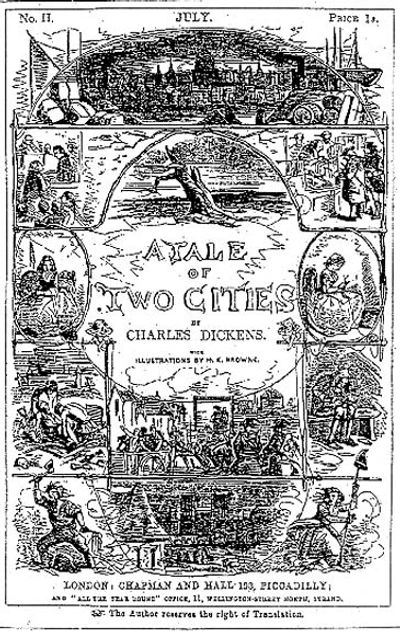
A Tale of Two Cities by Charles Dickens is a historical novel set in London and Paris before and during the French Revolution. It follows the intertwined lives of Charles Darnay, a reformed French aristocrat, and Sydney Carton, an English lawyer who looks exactly like him, both competing for the love of Lucie Manette. The narrative explores the struggles of the oppressed lower classes and the violent, retaliatory Reign of Terror. Ultimately, it culminates in a dramatic climax where Carton sacrifices himself on the guillotine to save Darnay's life, securing his own redemption.
Key Characters
Plot Breakdown
The Setup
The story begins in 1775. Tellson's Bank employee Jarvis Lorry escorts Lucie Manette to Paris. Lucie learns that her father, Dr. Manette, did not die as she believed but was secretly imprisoned in the Bastille. He is rescued and relocated to London, still reeling from the trauma of his captivity.
The Love Triangle
Five years later in London, Charles Darnay goes on trial for treason. He is acquitted thanks to the help of Sydney Carton, who points out their striking resemblance. Both men fall in love with Lucie. While Darnay wins her heart and they build a peaceful life, Carton remains a melancholic friend who pledges his willingness to lay down his life for Lucie and those she loves.
The Revolution Escalates
Meanwhile, in France, the unbearable cruelty of the French aristocracy sparks the French Revolution. The angry peasants storm the Bastille. Madame Defarge and other revolutionaries brutally slaughter nobles and burn estates. Charles Darnay returns to Paris decades later to rescue a loyal family servant, Gabelle, who has been imprisoned. However, Darnay's former noble status makes him an immediate enemy of the Revolution, and he is arrested.
The Sacrifice
Lucie and Dr. Manette travel to Paris in a desperate bid to save Darnay. Although Manette's former suffering in the Bastille briefly gets Darnay released, he is quickly arrested again. The revolutionaries discover Dr. Manette's old, hidden letter, which details how Darnay’s father and uncle previously abused a peasant family and imprisoned the doctor to keep him silent. As a result, Darnay is condemned to the guillotine. To ensure Lucie and her family can escape safely, Sydney Carton uses his resemblance to Darnay to slip into the prison. He trades places with his friend and goes to the guillotine in Darnay’s place. Carton's ultimate act of self-sacrifice provides him with the meaning and redemption he always sought in life.
Major Themes