Garnet House

Garnet HouseGarnet HouseGarnet House
Home
Six Salamanders Book List
The Memorandum Book
About
Contact
Events

Garnet House

Garnet HouseGarnet HouseGarnet House
Home
Six Salamanders Book List
The Memorandum Book
About
Contact
Events
More
  • Home
  • Six Salamanders Book List
  • The Memorandum Book
  • About
  • Contact
  • Events
  • Home
  • Six Salamanders Book List
  • The Memorandum Book
  • About
  • Contact
  • Events

About the Author

Vintage photo of a man seated, dressed formally.

Lewis Carroll

(January 27, 1932 – January 14, 1898)

English Author and Poet


Best known for his 1865 novel, Alice's Adventures in Wonderland.


Read more about him here: 

https://en.wikipedia.org/wiki/Lewis_Carroll


AI Overview


Lewis Carroll (whose real name was Charles Lutwidge Dodgson) was an English author, mathematician, and photographer. He lived from 1832 to 1898. He is most famous for writing Alice's Adventures in Wonderland and Through the Looking-Glass. He created a fantasy world full of strange logic, wordplay, and unforgettable characters. [1, 2]He used the pen name "Lewis Carroll" to separate his serious math books from his fun storybooks. During the day, he was a quiet math teacher at Oxford University. During his free time, he loved to tell stories to children. He invented the story of Alice during a boat trip with a young girl named Alice Liddell. [1, 2, 3]Here are some fun facts about his life:

  • Real-World Inspiration: The famous character "Alice" was based on a real child named Alice Liddell, the daughter of his boss.
  • Math Genius: In real life, he wrote 11 books on subjects like logic and geometry.
  • Fun Word Puzzles: He loved brain teasers and invented new words by mashing two words together. This is called a portmanteau word. An example is chortle (chuckle + snort). [1, 2, 3, 4, 5]

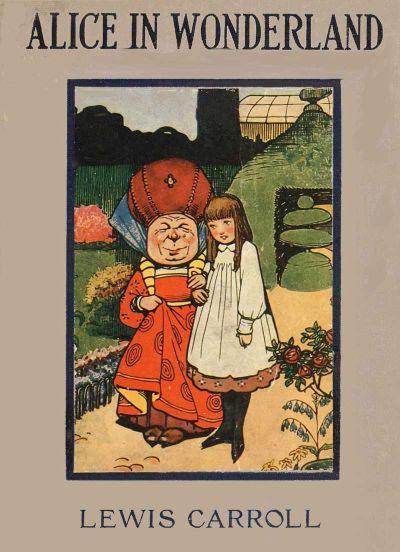
Alice's Adventures in Wonderland, 1865

AI Overview

The original Alice in Wonderland is a surreal 1865 fantasy novel by English author Lewis Carroll. It tells the story of a girl named Alice who falls down a rabbit hole into a fantastical world populated by anthropomorphic creatures. The famous animated adaptation was released by Disney in 1951. [1, 2, 3, 4, 5]


The Literary Classic (1865)

The original book, titled Alice's Adventures in Wonderland, was written by Charles Lutwidge Dodgson under his famous pseudonym, Lewis Carroll. He created the whimsical story to entertain young Alice Liddell and her sisters during a boat trip. [1, 2, 3, 4, 5]

  • Key Characters: The Mad Hatter, the White Rabbit, the Cheshire Cat, and the Queen of Hearts.
  • Legacy: The book was published in 1865 with iconic illustrations by John Tenniel. It has since never gone out of print and remains one of the most famous works of Victorian literature. [1, 2, 3, 4, 5]


The Disney Animated Adaptation (1951)

Walt Disney had been fascinated by the Alice stories as early as the 1920s. After years of development and script rewrites, Alice in Wonderland was released on July 28, 1951. [1, 2]

  • Reception: Though it was originally criticized by fans of Carroll’s books for its chaotic pacing and initially flopped at the box office, it has since achieved status as an animated classic.
  • Voice Cast: The film featured Kathryn Beaumont as Alice, Ed Wynn as the Mad Hatter, and Sterling Holloway as the Cheshire Cat.
  • Streaming: You can watch the 1951 film on Disney+. [1, 2, 3, 4]

About the Author

Lewis Carroll

About the Book

https://en.wikipedia.org/wiki/The_Merry_Adventures_of_Robin_Hood

Read the Original

https://archive.org/details/alicesadventures00carr_20/page/n9/mode/2up

Read the Project Gutenberg Digital Transcription

https://www.gutenberg.org/files/11/11-h/11-h.htm

Listen to the Audiobook

https://www.youtube.com/watch?v=FsByOCWSkvM

Listen to the History Behind the Story

https://www.youtube.com/watch?v=uahyAfNiTgc

About the Movies

Alice in Wonderland, 1903, 1933, 1951, 1966, 1972, 1985, 1988, 1999, 2010

Film Adaptations of Alice in Wonderland: 


Numerous Alice in Wonderland films exist, starting with the 1903 silent short Alice in Wonderland (the different versions) - IMDb.

Major adaptations span the iconic 1951 Disney animated movie Alice in Wonderland | Disney Movies and Tim Burton's 2010 live-action Alice in Wonderland - Rotten Tomatoes. [1, 2, 3, 4]Exploring the sprawling catalog of film and television versions provides a rich look at how directors have re-imagined Lewis Carroll's fantasy worlds over the last century.


Major Live-Action & Hybrid Films

  • Alice in Wonderland (1933): Produced by Paramount, directed by Norman Z. McLeod, and notable for its star-studded ensemble cast featuring W. C. Fields and Cary Grant. [1, 2, 3, 4, 5]
  • Alice of Wonderland in Paris (1966): An animated/live-action hybrid based on Carroll's books.
  • Alice in Wonderland (1972): A musical film adaptation directed by William Sterling.
  • Alice in Wonderland (1985): A star-studded TV movie produced by Irwin Allen.
  • Dreamchild (1985): A blend of live-action and surreal puppetry by Jim Henson's Creature Shop, exploring the older Alice and her relationship with Lewis Carroll.
  • Alice (1999): A Hallmark Entertainment television film heavily praised for its practical effects and massive cast.
  • Alice in Wonderland (2010): The hit Tim Burton blockbuster focusing on an older Alice returning to Underland, which spawned the sequel Alice Through the Looking Glass (2016). [1, 2, 3, 4]

Key Animated Adaptations

  • Alice in Wonderland (1951): The highly celebrated Disney classic Rating Every Disney Animated Film | Alice in Wonderland ... that combined characters and storylines from both of Carroll's core novels.
  • Alice (1988): A uniquely dark, stop-motion animation masterpiece by Czech surrealist Jan Švankmajer Films and television programmes based on Alice in Wonderland.

For a side-by-side visual comparison of the classic falling, shrinking, and tea party scenes across four different eras of Alice films:Related video thumbnail3mAlice in Wonderland (1933/1951/1985/1999) side-by-side comparisonMatt SkutaYouTube · Feb 20, 2022


Notable Early Works and Lesser-Known Versions

  • Alice in Wonderland (1903): The very first film adaptation of the book, directed by Cecil Hepworth and Percy Stow.
  • Alice in Wonderland (1931): Bud Pollard's version, famous for being the first "talkie" Top 10 Alice in Wonderland Movies – Ranked Bad to Worst.
  • Alice Through the Looking Glass (1966): Directed by Jonathan Miller, focusing heavily on the absurdity and adult-like politics of Carroll's second novel.
  • Alice (2009): A modern-day reimagining and miniseries starring Caterina Scorsone and Kathy Bates. [1, 2, 3, 4, 5]


Read more about the film adaptations here:

https://en.wikipedia.org/wiki/Films_and_television_programmes_based_on_Alice_in_Wonderland

Through the Looking-Glass, 1871

Overview

Through the Looking-Glass, and What Alice Found There (1871) is Lewis Carroll's sequel to Alice's Adventures in Wonderland, where Alice steps through a mirror into a reversed world, a land based on a chessboard where she progresses from pawn to queen by navigating nonsensical characters like Tweedledum, Tweedledee, Humpty Dumpty, and the Red and White Queens. The story is filled with logic puzzles, wordplay, and famous poems like "Jabberwocky," which Alice reads in reverse. 


Key elements of the story:

  • The setting: A mirror world where everything is backward, including the rules of logic and time. 
  • The plot: Alice enters the Looking-Glass world and finds herself in a giant chess game, moving across the board to become a queen. 
  • Characters: She encounters living chess pieces, talking flowers, the Walrus and the Carpenter, and the Red Queen, who famously says, "it takes all the running you can do, to keep in the same place". 
  • Themes: The book explores themes of identity, logic, and the transition from childhood to adulthood, all through a lens of surreal humor. 
  • Famous poems: It includes iconic poems like "Jabberwocky" and "The Walrus and the Carpenter," which are central to the narrative. 

About the Author

Lewis Carroll

About the Book

https://en.wikipedia.org/wiki/Through_the_Looking-Glass

Read the Original

https://archive.org/details/throughlooking00carr/mode/2up

Read the Project Gutenberg Digital Transcription

https://www.gutenberg.org/files/11/11-h/11-h.htm

Listen to the Audiobook

https://www.gutenberg.org/files/12/12-h/12-h.htm#link2HCH0001

About the Movies

Through the Looking-Glass

Overview


Alice Through the Looking Glass is a 2016 fantasy adventure film directed by James Bobin and produced by Tim Burton. It is the sequel to 2010's Alice in Wonderland. [1, 2, 3, 4, 5]The movie follows Alice (Mia Wasikowska) as she escapes a difficult situation in the real world and returns to Wonderland. She discovers the Mad Hatter (Johnny Depp) is in deep despair over the loss of his family. To save them, she travels through time using a magical device called the Chronosphere. Along the way, she must face the villainous Time (Sacha Baron Cohen) and the Red Queen (Helena Bonham Carter). [1, 2, 3, 4, 5]


Plot

The story begins with Alice working as a sea captain, honoring her late father's legacy. When she returns to London, she faces harsh sexism from businessmen trying to take away her ship. Escaping through a magical looking glass (mirror), she arrives back in the whimsical land of Underland. [1, 2, 3, 4, 5]She soon learns the Mad Hatter is severely depressed. He believes his family, whom everyone thought died in a fire, is actually still alive. Desperate to help her friend heal, Alice seeks out a physical, metallic globe called the Chronosphere. This device controls time itself. [1, 2, 3, 4, 5]


Concept of Time

In this movie, Time is portrayed as a real, half-human, half-clock character played by Sacha Baron Cohen. The Chronosphere is a real object that functions like a mechanical key. It allows people to travel into the past. [1, 2, 3, 4, 5]Think of time as an unbreakable river. The Chronosphere is a magical boat that lets Alice travel backward against the current of the river.Time warns Alice that she cannot change the past without risking the end of the entire universe. Nevertheless, she steals the Chronosphere to prevent the tragic death of the Hatter's family. [1, 2, 3, 4, 5]


Character Arcs and Themes

The time-travel mechanic allows the movie to show us the backstory of the main characters:

  • The Mad Hatter: We see how his childhood trauma affected his relationship with his strict father.
  • The Red and White Queens: We learn how their childhood feud caused the Red Queen to become a villain. [1, 2, 3, 4, 5]

At its heart, the film is about forgiveness, the importance of family, and learning from the past rather than trying to rewrite it. [1, 2, 3, 4]


Reception

Critics found the movie to be highly colorful with massive, impressive visual effects. However, many felt that the heavy computer-generated imagery (CGI) sometimes made the movie feel like a fast-paced video game rather than a story with emotional weight. [1, 2, 3]


Read more about the film adaptation here:

https://en.wikipedia.org/wiki/Alice_Through_the_Looking_Glass_(2016_film)


Watch the Trailer:

https://www.imdb.com/title/tt2567026/

Copyright © 2019 Lori Alayne Way and Garnet House  LLC. 

All Rights Reserved.

Powered by

  • Six Salamanders Book List
  • The Memorandum Book
  • About
  • Contact

This website uses cookies.

We use cookies to analyze website traffic and optimize your website experience. By accepting our use of cookies, your data will be aggregated with all other user data.

Accept